
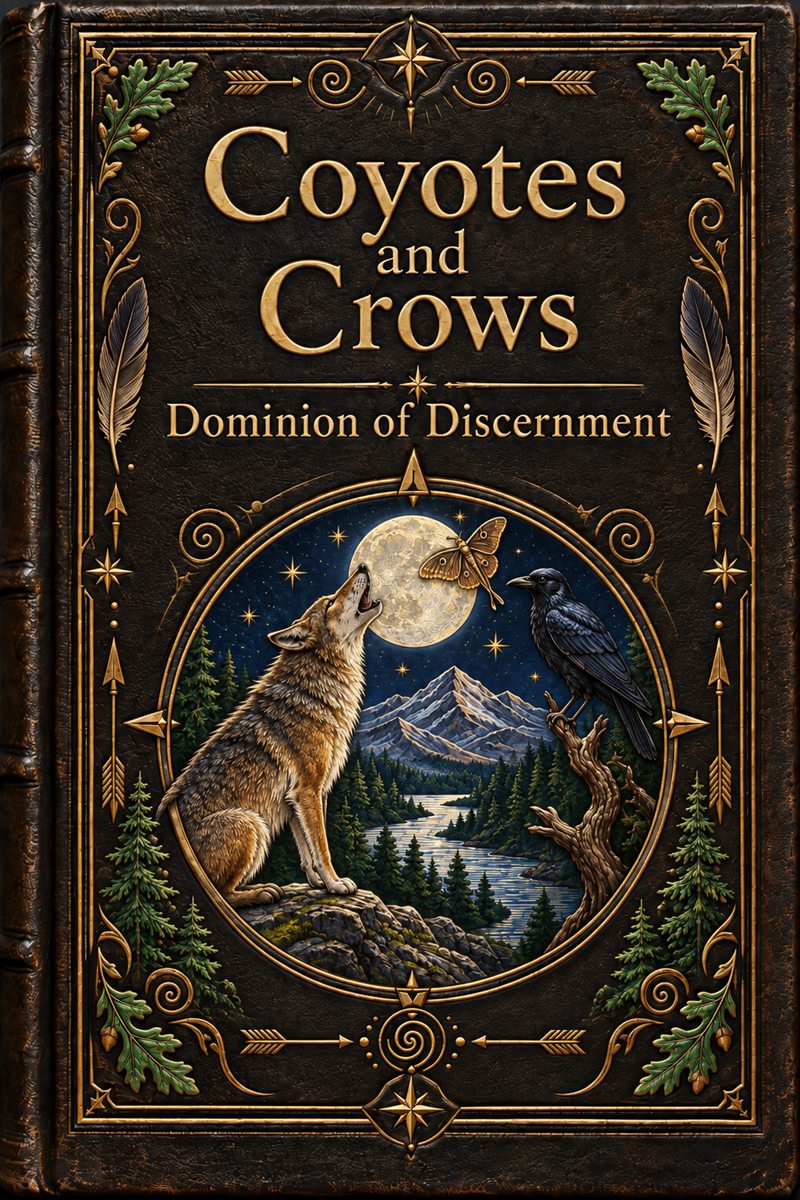
Coyotes and Crows
Dominion of Discernment
A doctrine of agency, boundaries, and the governance of the self — in twenty-four chapters.
❀
Nine parts · Six pillars
Contents
The Index
Front Matter
Part I — Agency
Part II — Discernment
Part III — Boundaries as Practice
05A Boundary Is a Promise to Yourself
06Values Without Boundaries Are Preferences
07Boundaries Establish Value
Part IV — Participation as Currency
08Your Participation Is Currency
09The Economics of the Self
10Self-Valuation Is Demonstrated Through Action
Part V — Fear and Compassion
Part VI — Forgiveness and Access
Part VII — Self-Trust
16Self-Trust Is Accumulated Evidence
17The Second Injury: Abandoning Yourself
18Self-Respect Is Behavioral
Part VIII — Internal Coherence
19Internal Contradiction Produces Instability
20Mind, Body, Heart, and Action
21Nervous-System Safety Through Self-Trust
Part IX — Return to Dominion
◆
The Six Pillars
IIf you do not have agency over yourself, you become a prisoner to someone else’s chaos.
IIA boundary is a promise to yourself, not a demand on someone else.
IIIUnderstanding behavior does not create an obligation to endure it.
IVForgiveness does not require access.
VSelf-trust is accumulated evidence.
VIInternal contradiction produces instability; internal coherence produces peace.
COYOTES AND CROWS · DOMINION OF DISCERNMENT